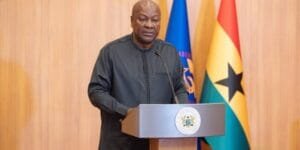

Foreign Affairs Minister Samuel Okudzeto Ablakwa has commended the Church of Pentecost in South Africa for providing temporary shelter to Ghanaians who were forced to leave their homes amid renewed anti-foreigner violence.
The commendation came as Ghana continued a voluntary evacuation exercise for citizens who said they no longer felt safe in parts of South Africa following renewed xenophobic violence. The latest phase of the operation began on July 26, 2026, with the government targeting about 1,000 additional returnees.
According to Mr Ablakwa, branches of the Church of Pentecost in Pretoria and Johannesburg opened their premises to affected Ghanaians while they waited for arrangements to return to Ghana.
Church facilities used as temporary shelter
The support from the church formed part of the humanitarian response to the situation facing Ghanaian nationals in affected areas.
Mr Ablakwa said the Church of Pentecost suspended normal activities at its facilities to provide a place of refuge for Ghanaians who had fled their homes.
The government has also acknowledged the contribution of the church’s leadership in Pretoria and Johannesburg, alongside Global Kingdom Investment Pty. Ltd., for providing shelter to affected nationals awaiting processing by the Ghana High Commission.
According to Mr Ablakwa, the churches suspended normal activities and opened their premises to Ghanaians who had fled their homes, providing temporary shelter while arrangements were made for their evacuation.
Ghana expands voluntary repatriation programme
The church’s intervention comes against the backdrop of a wider government response to renewed xenophobic violence in South Africa.
The Ghana News Agency reported that 926 Ghanaians returned during the first phase of the evacuation exercise, which involved three chartered flights on May 27, June 6 and June 7.
The second phase began on July 26 and is being conducted through commercial flights. The government said it plans to bring back another 1,000 Ghanaians in an orderly manner. By July 27, 132 people had returned, with another 84 expected by the following day.
The Foreign Affairs Ministry has said the evacuation is intended to assist Ghanaians who no longer feel safe in parts of South Africa and wish to return home.
Government introduces support for returnees
The repatriation programme has also been accompanied by measures aimed at helping returnees settle after arriving in Ghana.
The Information Services Department reported that each evacuated Ghanaian would receive GH¢5,000 as a reintegration grant, in addition to GH¢500 for travel and transport. Other support measures include relief items, National Health Insurance Scheme registration and assistance with SIM registration and communications services.
The government has also indicated that it is working with private-sector organisations to identify employment opportunities for some of the returnees. GBC reported that about 200 employment opportunities had been secured, including a commitment from Engineers and Planners to employ 100 returnees.
Calls for protection of Ghanaian nationals
Mr Ablakwa has maintained that Ghana expects South African authorities to protect foreign nationals and investigate attacks against migrants.
Mr Ablakwa has also said Ghana is pursuing diplomatic avenues over losses suffered by Ghanaian nationals during the violence.
The Ghanaian government has further petitioned the African Union to consider the recurring xenophobic attacks and explore a broader continental response, according to reports on the minister’s engagements.
At the same time, Ghana has continued to emphasise the importance of maintaining its relationship with South Africa while seeking greater protection for its citizens living and working there.
What happens next
The voluntary repatriation exercise is expected to continue as the government works to bring home registered Ghanaians who want to leave affected areas.
For those returning, the immediate focus will be on safe arrival, transportation to their communities and longer-term reintegration support.
The Church of Pentecost’s role in providing temporary shelter has emerged as one part of the broader humanitarian effort involving the Ghanaian government, diplomatic officials, private organisations and other groups supporting affected citizens.