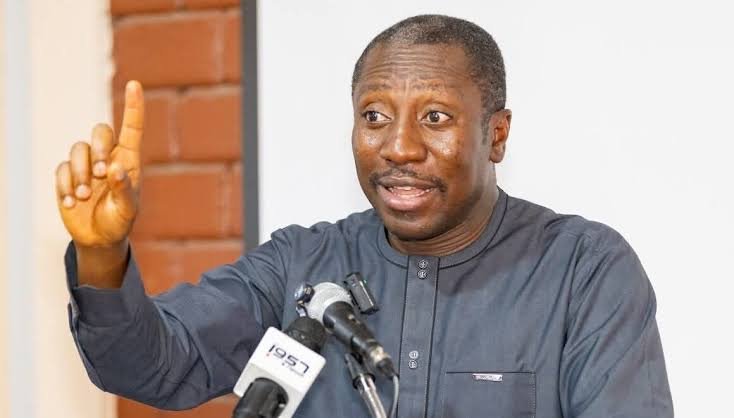
Minority Leader Alexander Afenyo-Markin has accused the government of using the legal case involving the social media account known as Ghana Jollof to divert public attention from concerns over drug trafficking and security lapses linked to Ghana.
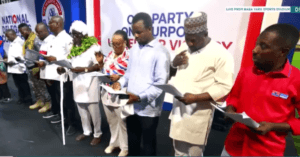
Afenyo-Markin made the allegation on Wednesday, October 7, 2026, at the launch of the 30th Ghana Journalists Association Media Awards in Accra. He argued that the focus should instead remain on how major narcotics consignments allegedly moved through Ghana and the people responsible for financing and organising such operations.
What Afenyo-Markin is alleging
The Minority Leader cited the case involving Salomey Awiti Bafoh, a nurse from the Techiman area who has been prosecuted over alleged links to the Ghana Jollof social media account.
He described the attention surrounding the case as a “red herring”, arguing that it has shifted public discussion away from the more serious issue of Ghana-linked cocaine seizures.
Afenyo-Markin further alleged that state security institutions were being used against political opponents while questions about drug trafficking remained unanswered.
He linked his argument to the seizure by French customs authorities of nearly 3.9 tonnes of cocaine in a container that had arrived from Ghana. The shipment was intercepted at the port of Dunkirk on September 10, with French authorities estimating its street value at about €225 million.
However, there is no evidence in the available reports establishing a direct connection between the Ghana Jollof case and the cocaine shipment. Afenyo-Markin is presenting the relationship as a political argument about public attention, not as an established operational link between the two cases.
Salomey Awiti Bafoh has pleaded not guilty to a charge of abetment of crime relating to the alleged publication and circulation of false news involving the Ghana Jollof account. Police have said their investigations found interactions and money-transfer transactions between Bafoh and Barbara Asantewaa Kodua, the woman identified by police as operating the account.
Bafoh was granted bail by an Adentan Circuit Court with GH¢100,000 on October 5, with two sureties required. She was also ordered to report to the Hensua Police Station every two weeks. The case has been adjourned to February 17, 2027.
Those proceedings concern alleged publication of false information and are distinct from the investigations into narcotics consignments linked to Ghana.
Afenyo-Markin’s latest comments come after the Minority in Parliament sought an inquiry into major narcotics seizures involving consignments linked to Ghana.
The motion, filed by First Deputy Minority Whip Habib Iddrisu on September 28, called for an Ad Hoc Committee to examine how major consignments were processed, inspected, cleared and exported from Ghana. The proposed inquiry cited the Dunkirk cocaine seizure and a separate 320-kilogramme methamphetamine seizure in Australia, among other incidents.
Speaker Alban Bagbin subsequently ruled the motion inadmissible, saying the proposed inquiry substantially overlapped with criminal matters already before the courts and could interfere with ongoing judicial proceedings.
Afenyo-Markin has rejected that reasoning and maintained that Parliament can still examine broader institutional and security issues without taking over the work of the courts.
Government has ordered action on the drug-trafficking concerns
The government has not simply left the narcotics issue unaddressed.
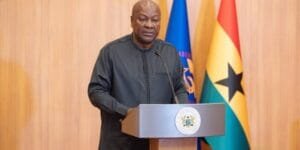
Following the French seizure, President John Mahama directed the formation of an inter-agency task force to develop measures to prevent drug trafficking through Ghana’s borders. The task force was instructed to produce a roadmap after an urgent meeting involving security chiefs and relevant ministers.
The government also reported that investigations had led to arrests, including Customs officers, as authorities examined how the cocaine shipment allegedly passed through Ghana’s export-control system.
Separately, NACOC and other agencies have been involved in investigations surrounding the Dunkirk shipment. Four Ghanaian nationals have since been charged in connection with the case, according to reports, while the criminal proceedings remain ongoing.
The first is whether Ghana’s ports, borders and export-control systems are sufficiently effective to prevent narcotics trafficking. The second is whether state institutions are applying their investigative powers fairly when dealing with politically sensitive cases.
Afenyo-Markin argues that the government’s response has not adequately answered the first question and that the Ghana Jollof case has helped shift public attention elsewhere.
That remains his assessment. It should not be presented as proof that the government deliberately initiated the Ghana Jollof proceedings to conceal information about drug trafficking.
The drug investigations, the parliamentary dispute and the Ghana Jollof court case are continuing on separate tracks.