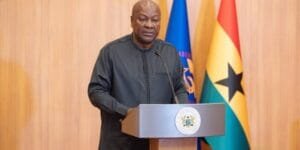
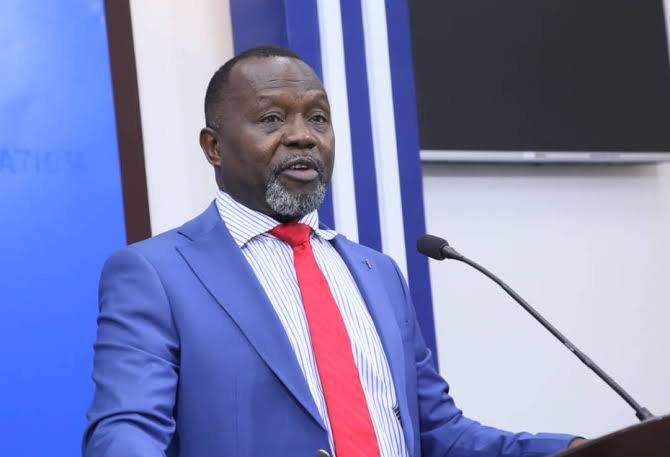
Attorney-General and Minister for Justice Dr Dominic Ayine has renewed questions about Ghana’s spending on the stalled National Cathedral project, arguing that the resources committed to the initiative could have been directed towards completing some hospitals under the Agenda 111 programme.
Ayine’s comments place the long-running National Cathedral debate alongside one of Ghana’s most prominent healthcare infrastructure initiatives, highlighting the competing demands on public finances.
The National Cathedral has faced years of controversy over its financing, expenditure and slow progress.
Government expenditure on the project has previously been publicly acknowledged at hundreds of millions of Ghana cedis. In January 2023, the National Cathedral Secretariat said total government expenditure had reached GH¢339 million, including payments to consultant Sir David Adjaye and funds released directly to the Secretariat.
The project has also been the subject of parliamentary scrutiny and investigations over how public funds were committed to it.
In 2025, the Attorney-General said a forensic audit of the project was nearing completion, with PricewaterhouseCoopers (PwC) carrying out substantial work on the assignment.
Ayine’s latest argument therefore adds a healthcare dimension to the wider debate over whether public resources devoted to the Cathedral represented the best use of state funds.
Agenda 111 was introduced under the former Akufo-Addo administration as a major expansion of healthcare infrastructure, targeting district and regional hospitals across the country.
The programme has, however, faced delays, funding challenges and questions over the status of several projects. An analysis published in 2024 noted that while many of the projects were at various stages of construction, a number had seen little or no physical work.
The comparison between the two projects has consequently become part of Ghana’s broader political argument over development priorities.
The issue is not simply about the existence of a National Cathedral or the need for hospitals. It also raises questions about how governments should balance major national projects against immediate infrastructure gaps in healthcare.
Criticism of the Cathedral’s use of public funds is not new.
In 2022, Ayine, then a Member of Parliament, was among Minority legislators who opposed an GH¢80 million allocation for the project, citing concerns over financial accountability.
Parliamentary records have also captured arguments that the money spent on the Cathedral could instead have supported roads, hospitals and other infrastructure.
The project has since remained politically contentious, particularly because construction has not produced the originally anticipated national monument.
The government’s ongoing examination of the National Cathedral’s finances is likely to determine the next phase of the controversy.
Ayine’s comparison with Agenda 111 also puts greater focus on the completion of unfinished healthcare projects and the broader question of how Ghana prioritises scarce public resources.