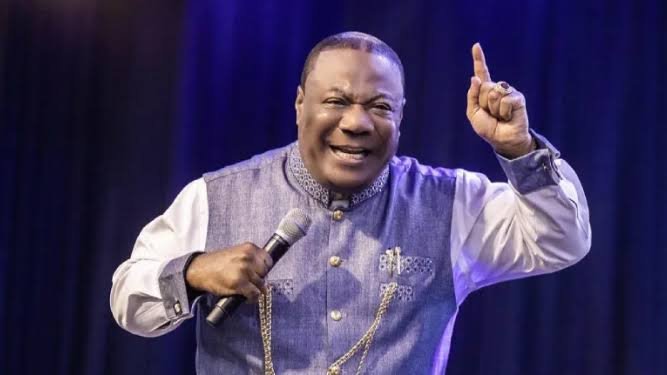
Archbishop Nicholas Duncan-Williams has attributed the failure to complete Ghana’s National Cathedral project to what he describes as a lack of commitment among Christians, rather than corruption.
The founder and General Overseer of Action Chapel International made the comments while preaching to his congregation, as debate over the future of the stalled project continues.
Duncan-Williams, who previously served on the National Cathedral’s Board of Trustees, said his experience with the project informed his rejection of corruption as the main reason it was not completed.
“The National Cathedral was not built, not because of corruption. I was right there. It was because we Christians are not serious,” he said.
What Duncan-Williams said about the National Cathedral
The Archbishop argued that Christians had not done enough to support initiatives intended to benefit the church and future generations.
He criticised what he described as a tendency among some believers to prioritise personal comfort and wealth while giving insufficient attention to projects and causes that, in his view, serve the wider Christian community.
“We are not serious about posterity. We are not serious about the kingdom. We are a bunch of selfish, greedy people. It’s all about us. We don’t think about the kingdom,” he said.
Duncan-Williams also challenged Christians to assess their personal contributions to the church before criticising others.
He questioned whether believers who had spent years receiving blessings and opportunities had done enough to leave something meaningful for future generations.
His remarks extended beyond the cathedral project. He also criticised Christians whom he said were reluctant to assist people facing financial difficulties, including widows, single mothers and families struggling with school fees and rent.
Duncan-Williams’ earlier role in the project
The Archbishop’s comments are significant because of his previous involvement with the National Cathedral initiative.
However, his position as a trustee was not without controversy. In October 2023, Duncan-Williams and Reverend Eastwood Anaba resigned from the Board of Trustees, citing the absence of an audit they believed was necessary to restore public confidence in the project.
That history is important when assessing his latest comments. His assertion that corruption was not the reason for the project’s failure is his stated position based on his experience; it does not by itself settle the wider questions surrounding the project’s financing and management.
Indeed, the Attorney General and Minister for Justice, Dominic Ayine, said in August 2026 that a PwC report on the National Cathedral had raised concerns about the use of public funds allocated to the project. He said he had received the report and was yet to brief President John Mahama on its contents.
The National Cathedral debate is still active
Duncan-Williams’ intervention comes at a time when discussions about the project have started again under the Mahama administration.
Local Government, Chieftaincy and Religious Affairs Minister Mahama Ayariga recently said he had no objection to Ghana having a National Cathedral but described the previous implementation of the project as poor. He has called for consensus among Christian denominations on issues including the location, cost and financing arrangements.
The Christian Council of Ghana has also called on the government to help create the conditions needed to revive the project. Its General Secretary, Rev. Dr Cyril Fayose, said the Christian community was prepared to mobilise resources locally and internationally towards its completion.
Ayariga has similarly called for a united Christian position before further decisions are taken on the project. He said Christians in Ghana and abroad had the capacity to mobilise resources if the various denominations could agree on the way forward.
What happens next
There is no indication that the government has formally committed to completing the existing project in its current form.
The discussions are instead focused on reaching agreement among Christian groups and addressing outstanding questions about the cathedral’s location, cost and financing.
Duncan-Williams’ comments add another perspective to that debate. While he places the emphasis on Christian commitment and willingness to support the project, government officials and other stakeholders continue to raise questions about how the project should be financed and implemented.
The National Cathedral therefore remains an unresolved national project, with its future dependent on decisions that involve both the Christian community and the state.