Ghana and the United Nations Children’s Fund (UNICEF) are exploring stronger measures to protect children and adolescent girls facing social and economic vulnerabilities, with particular attention to child marriage, teenage pregnancy and birth registration.
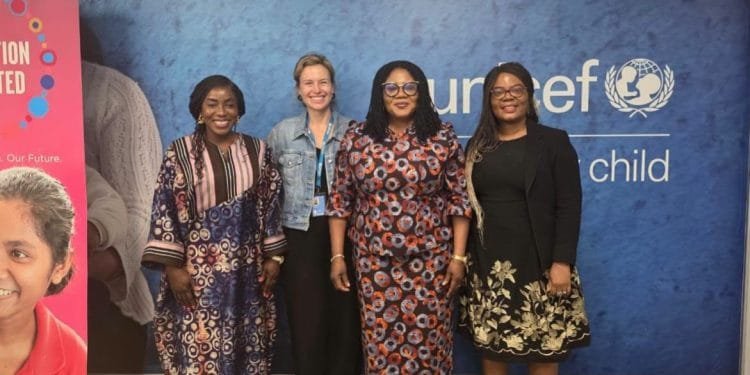
The discussions took place in New York on the sidelines of the 81st United Nations General Assembly, where Minister for Gender, Children and Social Protection Dr Agnes Naa Momo Lartey held bilateral talks with senior UNICEF officials.
The engagement forms part of wider efforts to strengthen Ghana’s child protection systems and improve how vulnerable children and families are identified and connected to support services.
What happened
The meeting focused on challenges affecting children and adolescent girls, including child marriage, adolescent pregnancy, birth registration and broader protection concerns.
A key issue was how Ghana can improve coordination between birth registration and child protection services.
The discussions considered the role of a stronger birth registration system in identifying children who may be at risk and linking them to appropriate protection interventions.
The talks did not amount to the announcement of a new nationwide programme or funding package. Rather, they centred on strengthening existing interventions and cooperation between Ghana and UNICEF.
Why birth registration matters
Birth registration is more than a record of a child’s birth. It provides a recognised legal identity that can help children access essential services and enables authorities to better identify and plan for vulnerable populations.
UNICEF Ghana recently highlighted the importance of ensuring that every child is registered, describing a birth certificate as a child’s first official proof of identity. The agency has also been working with Ghana’s Births and Deaths Registry to address barriers preventing some children from being registered.
The latest Ghana-UNICEF discussions place that issue within a wider child protection framework, particularly for children who may be vulnerable to practices such as early marriage.
Wider challenges facing adolescent girls
The discussions come against a backdrop of continuing challenges for adolescent girls in Ghana.
UNICEF’s work in the country identifies child and forced marriage, adolescent pregnancy, gender-based violence, abuse and exploitation among risks that can disproportionately affect girls.
The agency has increasingly promoted approaches that connect protection with education, health and economic support rather than addressing each challenge separately.
In July 2026, UNICEF reported on programmes in Ghana’s North East Region designed to help adolescent girls remain in school, access health services, develop skills and receive protection. The organisation said challenges such as poverty, early pregnancy and harmful social norms can overlap, requiring coordinated support.
The latest engagement also fits into a wider national discussion about improving child protection systems.
A 2026 UNICEF situation analysis of children and adolescents in Ghana identified gaps in financing, coordination and access to services as continuing challenges, particularly for poorer, rural and marginalised children.
Separately, Ghanaian civil society organisations and development partners have recently raised concerns about financing and implementation gaps in child protection.
In September, SOS Children’s Villages Ghana called for sustained investment in child protection, while participants at a national dialogue pointed to resource constraints affecting social welfare departments and frontline services.
These issues highlight the practical challenge of turning policies and commitments into services that reach children and families who need them
The government and UNICEF are expected to continue working together on interventions aimed at improving child protection and support for adolescent girls.
For birth registration, stronger links with child protection systems could help authorities identify vulnerable children earlier and connect them with appropriate services.
The discussions reinforce Ghana and UNICEF’s stated focus on strengthening systems around birth registration, preventing child marriage and adolescent pregnancy, and improving protection for vulnerable children and girls.