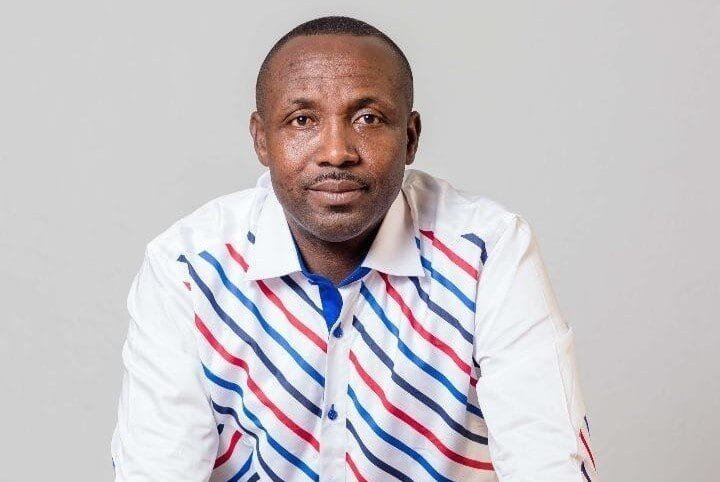
Newly elected New Patriotic Party (NPP) National Chairman John Boadu has pledged to rebuild the party from the grassroots and strengthen its organisational structures as the party begins preparations for the 2028 general election.
Boadu made the commitment after winning the chairmanship at the NPP’s National Delegates Conference held at the Baba Yara Sports Stadium in Kumasi on Saturday, October 3, 2026. He secured 2,888 votes, defeating Boakye Kyerematen Agyarko, Paul Afoko and Samuel Kenneth Adolphus Ben Crabbe.
His victory puts him at the centre of the NPP’s organisational work over the next four years, with the former General Secretary promising a leadership style focused on consultation, unity and stronger grassroots structures.
What John Boadu plans to change
In his acceptance speech, Boadu said his election should not be viewed simply as a personal victory but as a responsibility to the party.
He appealed to the other candidates who contested the chairmanship to remain involved, arguing that their experience, ideas and networks could contribute to rebuilding the NPP.
“There must be no winners and losers. Only one NPP united around one purpose,” he said.
Boadu said his administration would work with regional and constituency executives, Members of Parliament, party patrons, external branches and other organised groups within the NPP.
A major part of his plan is to strengthen the party at the constituency level, which he identified as an important part of its organisational and financial foundation.
Youth and modern communication take centre stage
Boadu also placed young people at the heart of his proposed rebuilding effort.
He said the NPP must create a stronger sense of belonging among young members while expanding engagement with the Tertiary Students’ Confederacy Network (TESCON), voluntary groups and young people generally.
He further proposed giving tertiary institutions greater attention as spaces for political dialogue and leadership development.
The new chairman also called for closer engagement with social media practitioners and traditional media, arguing that a modern political organisation must use different channels to communicate with the public and its members.
His agenda also includes stronger engagement with women, professionals, traditional leaders, religious leaders and Ghanaian entrepreneurs.
NPP leadership prepares for 2028
Boadu’s election comes as the NPP reorganises after losing the 2024 general election and looks ahead to another presidential and parliamentary contest in 2028.
The new chairman said the party would work with its flagbearer, Dr Mahamudu Bawumia, and the wider national leadership to improve its organisational and financial structures.
He also cautioned party members against treating an electoral victory as automatic.
“Political victory is never an entitlement. It must be earned through service, organisation, credibility, and the trust of the Ghanaian people,” Boadu said.
That message forms an important part of his stated approach: rather than relying on the NPP’s previous electoral successes, the party must rebuild its structures and reconnect with voters.
The NPP has also elected a new national executive team, with Justin Frimpong Kodua retaining the General Secretary position. Other elected officers include Kojo Fosu Boadu, Henry Nana Boakye, Nana Akomea, Daniel Nii Kwartei Titus-Glover, Mavis Hawa Koomson, Abanga Fuseini, Alfred Kojo Thompson and Mohammed Ali Suraj.
Boadu now faces the task of translating his acceptance-speech commitments into the party’s day-to-day operations.
His stated priorities include rebuilding constituency structures, improving internal consultation, empowering young people, strengthening engagement with different groups and working with the national leadership ahead of 2028.
He has also pledged to lead through consultation and to bring different sections of the party into the rebuilding process.
While Boadu ended his speech by declaring that “Victory is assured in the year 2028,” that remains his political expectation rather than an established outcome. The immediate challenge for his administration is to demonstrate whether the organisational changes he has promised can strengthen the NPP’s position before the next general election.