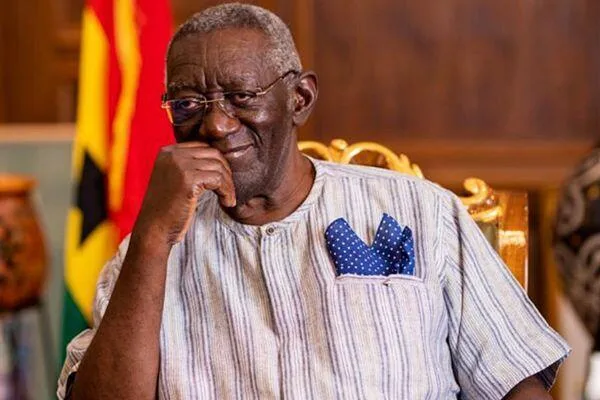
Former President John Agyekum Kufuor has said former Prime Minister Kofi Abrefa Busia was treated unfairly in Ghana’s political history.
The former president made the observation in comments highlighting Busia’s place in Ghana’s political development. His remarks have renewed attention on the legacy of the former prime minister and his contribution to the country’s political history.
Kufuor’s comments also come amid continued discussions about Ghana’s political traditions and the historical contributions of leaders who have shaped the country since independence.
Kufuor reflects on Busia’s political legacy
According to the report published by ModernGhana, Kufuor argued that Busia’s role in Ghana’s political history has not received the treatment he believes it deserves.
Busia served as Ghana’s Prime Minister from 1969 until 1972 under the Second Republic. His government followed the period of military rule that began after the overthrow of President Kwame Nkrumah in 1966.
Busia’s administration became associated with policies aimed at addressing Ghana’s economic challenges at the time. However, his government was overthrown in a military coup in January 1972.
Busia remains an important figure in Ghana’s political history
Busia remains a significant figure in the history of Ghana’s political development.
He was a leading member of the United Party tradition, which later influenced the political traditions associated with the New Patriotic Party (NPP).
His political philosophy also continues to attract discussion among scholars, politicians and supporters of Ghana’s liberal democratic tradition.
Kufuor, who later became president under the NPP, has frequently been associated with this political tradition.
Ghana’s political history continues to attract debate
The comments about Busia highlight the wider debate over how Ghana remembers its political leaders.
Different governments and political movements have interpreted the country’s political history in different ways. As a result, the legacy of major political figures can remain a subject of debate.
Kufuor’s assessment represents his view of Busia’s historical treatment. It should therefore be understood as a political and historical opinion rather than an independently established conclusion.
Busia’s place in the Second Republic
Busia became prime minister after the 1969 parliamentary elections, which returned civilian government following military rule.
His government faced serious economic pressures during its time in office. The administration was eventually removed from power by the military coup led by Colonel Ignatius Kutu Acheampong in January 1972.
Busia later went into exile and died in London in 1978.
His short period in office nevertheless remains an important part of Ghana’s post-independence political history.
Kufuor’s comments add to the historical conversation
Kufuor’s remarks are likely to contribute to continuing discussions about Busia’s political legacy and the broader history of Ghana’s democratic development.
For historians and political observers, such reflections also provide an opportunity to examine how Ghana’s political traditions evolved and how past leaders continue to influence contemporary political thought.
The debate over Busia’s legacy is expected to remain part of Ghana’s broader conversation about political history, leadership and democratic development.