
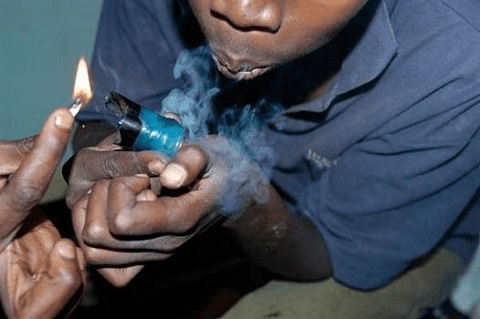
About one in every 10 people surveyed in Ghana who use drugs said they began using them before reaching age 15, according to findings presented at a national dialogue on drug policy, human rights and public health in Accra.⁷
The finding was disclosed by Professor Samuel K. Dery of the University of Ghana’s School of Public Health during the Second National Dialogue on Drug Policy, Human Rights and Public Health, organized by the Narcotics Control Commission (NACOC) and its partners.
The study provides a closer look at the age at which substance use begins among people who use drugs and adds to calls for earlier prevention, treatment and mental health interventions.
Survey covered more than 4,000 drug users
Prof. Dery said the study involved 4,031 participants from different parts of Ghana.
The respondents comprised 3,257 non-injecting drug users and 774 injecting drug users.
The research was designed to map drug-use hotspots, estimate the number of people who use drugs and examine issues including HIV, behavioural patterns and mental health.
Importantly, the researcher clarified that the study focused on people who use drugs associated with HIV risk. It was therefore not a general population survey measuring drug use among all Ghanaians.
That distinction is significant when interpreting the 10% figure. It should not be presented as meaning that 10% of Ghana’s entire population began using drugs before age 15.
More than half had started by age 19
The age pattern identified by the survey extends beyond childhood initiation.
According to the findings presented by Prof. Dery, more than half of the respondents had begun using drugs by age 19.
For policymakers and health professionals, the figures point to adolescence as an important period for prevention and early support.
The findings also add to calls for a broader response that combines prevention, treatment, mental-health support and law-enforcement measures.
Study reveals wider health concerns
The survey highlighted other challenges affecting people who use drugs.
Prof. Dery reported that 44% of respondents experienced moderate to severe depression, while another 44% experienced moderate to severe anxiety.
The study also found that 17% had either contemplated or attempted suicide, while 31% reported experiencing physical violence. Nine per cent reported sexual violence and 35% said they had experienced stigma because of their drug use.
These findings place the early-age drug-use figure within a broader public-health picture involving mental health, violence, stigma and access to care.
Treatment remains a major gap
The survey also identified limited awareness of treatment options among respondents.
More than 75% were reportedly unaware of where they could obtain addiction treatment, while only about 26% knew where treatment programs were available.
Prof. Dery consequently called for greater access to treatment and rehabilitation, stronger mental health services and efforts to reduce stigma and violence against people who use drugs.
He also argued for harm-reduction programs to complement law-enforcement measures.
Findings presented as Ghana reviews its drug policy
The survey was discussed against the backdrop of Ghana’s ongoing efforts to implement the Narcotics Control Commission Act, 2020 (Act 1019).
At the Second National Dialogue, held in Accra in July 2026, stakeholders from government, law enforcement, health, academia, civil society and international organizations examined gaps between the country’s drug-policy legislation and its implementation.
Deputy Interior Minister Ebenezer Okletey Terlabi said Ghana needed to move from policy commitments to practical implementation of the reforms contained in Act 1019.
The proposed Narcotics Control Commission (Drug Demand and Harm Reduction) Regulations, 2026 had, according to the Deputy Minister, been submitted to the Attorney-General’s Office for consideration.
NACOC Director-General Major General Maxwell Obuba Mantey has also called for stronger cooperation among government agencies, health professionals, civil society and development partners to address emerging drug threats and expand implementation of Ghana’s drug-policy reforms.
Why the age-of-initiation finding matters
The findings highlight adolescence as an important period for prevention and early intervention. But the survey’s findings should be read in context: the 10% figure applies to the study’s respondents, not Ghana’s population as a whole.
For Ghana’s policymakers, the immediate question is how prevention, education, treatment and mental health support can reach vulnerable young people before substance use becomes entrenched.
The broader policy discussion is now moving towards implementation of Act 1019 and improving access to services for people affected by substance use.