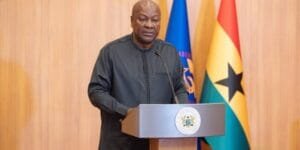

The Ghana Gold Board (GoldBod) has defended its role in the foreign exchange market, saying its dollar sales arise from gold-related operations rather than currency trading.
Chief Executive Officer Sammy Gyamfi made the clarification on Tuesday, October 13, 2026, when he appeared before Parliament’s Public Accounts Committee (PAC). He also told the committee that the Bank of Ghana had provided guidance and authorisation for GoldBod’s funding arrangement.
The explanation comes as the institution’s approach to financing gold purchases and supplying foreign exchange remains a matter of public and economic interest.
How GoldBod says its forex model works
Gyamfi told the committee that GoldBod sells foreign exchange generated through its statutory activities. He argued that this differs from the business model of licensed foreign exchange dealers, which buy and sell currencies.
According to the hearing, Gyamfi said the dollars generated by GoldBod’s operations are sold to make the proceeds available for the institution’s gold-related activities and wider mandate.
The Ghana Gold Board Act, 2025 (Act 1140), establishes the legal framework under which GoldBod operates. The board’s stated responsibilities include buying and exporting gold and generating foreign exchange to support Ghana’s external position and the Bank of Ghana’s gold reserve accumulation.
Gyamfi said the institution wrote to the central bank on September 23, 2026, seeking guidance and authorisation for its funding model after securing policy approval from the Finance Minister. He told MPs that the Bank of Ghana had responded with the necessary guidance and authorisation.
A change in how gold purchases are financed
The clarification follows a change in GoldBod’s relationship with the central bank.
In an August 11 update, GoldBod said it had stopped acting as a buying agent for the Bank of Ghana and had moved towards raising funds directly through commercial banks and gold offtakers. The board indicated that the revised arrangement had taken effect in March 2026.
Under the previous framework, the central bank provided funding to GoldBod to facilitate gold purchases on its behalf. The newer model is intended to give GoldBod greater operational independence while allowing it to continue aggregating gold for export and reserve accumulation.
The Bank of Ghana has also published guidelines for foreign exchange intermediation through spot auctions under the Domestic Gold Purchase Programme. Its notice, dated October 6, 2026, confirms that the central bank has set out rules governing that process.
What remains important to monitor
GoldBod’s distinction between selling foreign exchange generated by its operations and trading currencies is central to its explanation of the model. However, the wider questions for the public include how the arrangement is implemented, what costs it carries and how effectively it supports Ghana’s foreign exchange needs.
The committee’s proceedings and the relevant official records will be important in assessing those issues. GoldBod’s explanation represents the institution’s position; evaluating the full impact of the funding model also requires scrutiny of the applicable rules, transaction data and financial disclosures.