The Office of the Presidency has indicated a clear transition from mediation to enforcement in the protracted Bawku conflict, strongly reaffirming Supreme Court-sanctioned chieftaincy legitimacy and cautioning against any semblance of alternative authority.
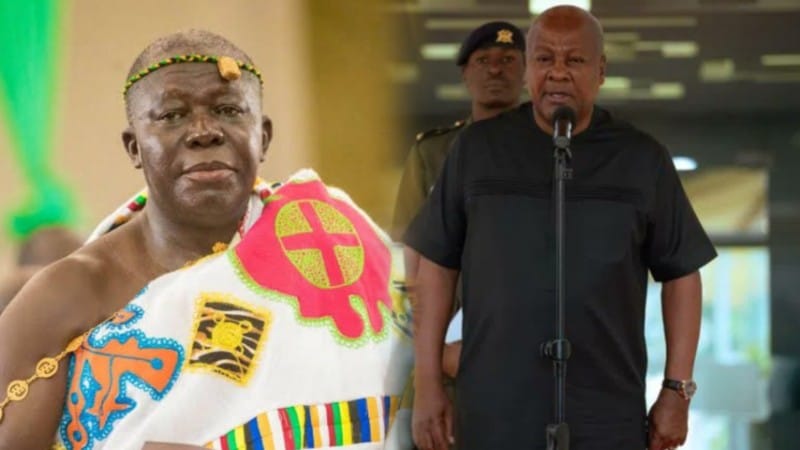
According to a statement from the Presidency, government conducted a comprehensive review, engaged in thorough deliberation, and subsequently accepted the Bawku Conflict Mediation Report submitted by Asantehene Otumfuo Osei Tutu II.
The government has emphasized that the legal status of the chieftaincy issue in Bawku is clearly established. “Naaba Azoka II is recognized as the rightful Bawku Naba,” the statement asserted, emphasizing that “no person or group is allowed, under any conditions, to challenge his authority or legitimacy.”
The statement progresses past mere dialogue by delineating specific actions to be taken by the state. The government has confirmed its intention to “immediately facilitate the safe movement of Alhaji Seidu Abagre to Nalerigu,” aligning with recommendations for him to take on an alternative traditional role under the Nayiri.
The Mahama-led administration characterized the mediation report as “thorough, grounded in facts, and oriented towards the future,” emphasizing that its primary aim is “solely to foster enduring peace, reconciliation, and stability in Bawku and its neighboring regions,” rather than to “assign blame or declare victory for any side.”
The Presidency has requested that Otumfuo Osei Tutu II maintain his role in offering “distinguished leadership and moral authority” to aid in reconciliation efforts between the Mamprusi and Kusasi communities, as the state seeks to uphold lawful authority and restore peace.