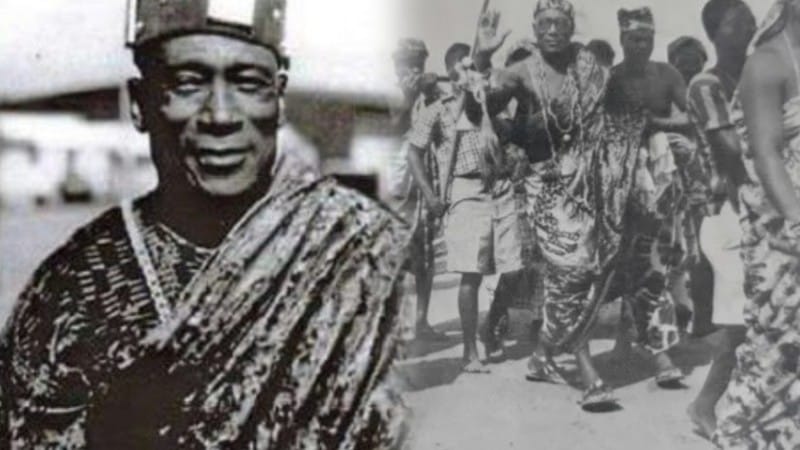
Before Kwame Nkrumah’s fiery slogans, before the CPP’s mass rallies, there was a quiet but determined traditional leader whose actions shook the colonial establishment to its core.
His name was Nii Kwabena Bonnie III, the Osu Alata Mantse, a man whose influence was so powerful that the British later acknowledged that he helped set the Gold Coast on the road to independence.
Today, he is barely mentioned in the official narrative. Yet in January 1948, it was his movement, not a political party, that triggered the chain of events leading to Ghana’s freedom.
The Boycott That Shook The Gold Coast
In late 1947, ordinary citizens in the Gold Coast faced crisis: European merchants were deliberately inflating prices. Cocoa farmers were suffering, urban families were starving, and the cost of living became unbearable.
Nii Kwabena Bonnie III Decided That Was Too Much
On 24 January 1948, he launched a nationwide boycott of European goods under the banner of the Anti-Inflation Campaign Committee. The slogan was simple but powerful: “Mmre Dane — times are changing.”
For weeks, the streets of Accra, Cape Coast, Kumasi, and Sekondi-Takoradi echoed with support. Traders shut their stalls. Households refused foreign products. The colonial economy trembled.
Behind the scenes, the British grew nervous. This was no political party. This was the people, united, angry, and organised.
The Connection To The 28 February Riots
The boycott set the entire colony on edge. When the ex-servicemen marched on 28 February 1948 to petition the Governor and were shot at by colonial police, the resentment that Nii Kwabena Bonnie had already awakened exploded.
Riots erupted across the country. Shops were vandalised. Roads were blocked. The colonial administration panicked.
The British Commission of Inquiry, the Watson Commission, later wrote that Nii Kwabena Bonnie’s boycott had revealed “the deep-rooted discontent of the masses” and exposed the weakness of colonial authority.
In other words, his movement set the stage for the push toward self-government.
But Where Was He After Independence?
When Ghana finally gained independence in 1957, many expected that the man who organised the most effective civil resistance of the 1940s would take his place among the nation’s honoured heroes.
Instead, something very different happened.
Nkrumah’s Cold Shoulder
Kwame Nkrumah admired mass mobilisation, but only when he controlled it. Nii Kwabena Bonnie’s influence came not from a political party but from the people themselves. He answered to no party machine, no CPP hierarchy, and he did not enter Nkrumah’s political fold.
As Nkrumah consolidated power; Traditional leaders were weakened, independent civic organisers were sidelined and political recognition was reserved for loyal members of the CPP. In this new political order, Nii Kwabena Bonnie did not fit.
The Silent Erasure
Despite his central role in the uprising of 1948, Nii Kwabena Bonnie received…
- No national award
- No official state recognition during the First Republic
- No mention in the heroic pantheon created by CPP publications
The man whose boycott ignited the journey to independence slowly faded from the spotlight.
The Man Who Deserved More
Today, historians agree that had Nii Kwabena Bonnie not mobilised the colony in 1948, the pace toward independence might have been very different.
His Boycott Exposed Colonial Exploitation
His movement awakened national consciousness, his courage helped spark the biggest political turning point in the Gold Coast since 1900 and his £50 made Nkrumah stay yet, post-independence politics pushed him into the shadows.
A Legacy History Is Finally Reclaiming
As Ghana revisits its past, the name Nii Kwabena Bonnie III resurfaces, not as a footnote, but as one of the men who forced the Gold Coast to confront its destiny.
He was a leader without a propaganda machine.
A nationalist without a party.
A patriot who never received the honour he deserved. And that is one of the untold stories of Ghana.