
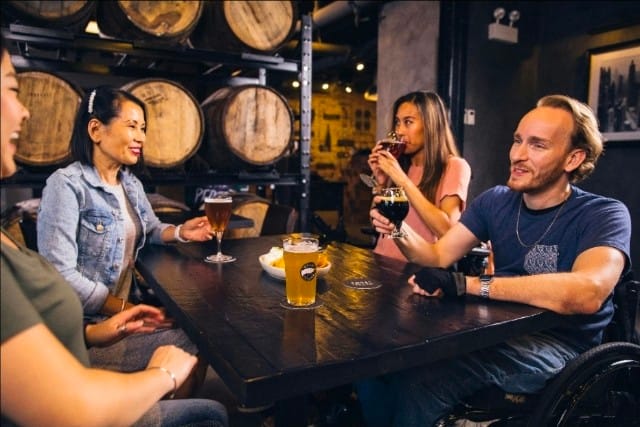
The global hospitality industry—hotels, airlines, booking platforms, and tour operators—has long been about service and experience. Yet, for millions of travelers with disabilities, travel hasn’t always felt accessible, equitable, or empowering. Now, that’s changing fast.
With new technologies and inclusive design principles gaining traction, accessibility is becoming more than an afterthought—it’s becoming the next frontier of innovation.
The Big Picture in Brief
- Inclusive travel tech is revolutionizing how stores, hotels, restaurants, and airlines accommodate guests with disabilities.
- From AI-driven voice assistants to mobility-mapped destinations, accessibility tech is improving both convenience and dignity.
The Shift Toward Universal Design
Accessibility used to mean installing ramps or providing braille menus. Today, it’s about building systems that anticipate and adapt to diverse needs—across sensory, mobility, and cognitive differences. Hotels are using smart sensors, app-based room controls, and custom navigation aids to ensure guests of all abilities experience equal comfort. Here’s how innovation is unfolding across the industry:
Tech Innovation | Application in Hospitality | Impact on Accessibility |
Voice-activated room controls | Lights, curtains, temperature, entertainment | Empowers guests with limited mobility |
AI-driven concierge assistants | Multilingual, voice, or text-based assistance | Removes communication barriers |
Augmented reality navigation | Visual and audio guidance through properties | Helps blind or low-vision travelers orient easily |
Contactless check-in/out systems | App or kiosk-based | Simplifies entry and avoids physical barriers |
Transmit location and emergency alerts | Increases independence and safety for solo travelers |
These technologies don’t just improve comfort—they level the playing field.
The Digital Doorway to Inclusion
Hospitality begins long before a guest arrives—it starts online. For many travelers with disabilities, the biggest barrier isn’t at the hotel lobby; it’s on the booking site. Businesses that prioritize digital accessibility are leading the way in equitable customer experience.
Practical measures like adding alt text, supporting keyboard navigation, and improving color contrast go a long way in breaking down virtual barriers. If your goal is designing an accessible website that’s open to all, this guide offers a step-by-step overview of essential design and usability practices. Accessibility online translates directly into inclusivity offline—helping travelers of all abilities book with confidence.
Everyday Solutions with Extraordinary Impact
Accessibility doesn’t have to be complex to be transformative.
- Smart room design: Adjustable-height furniture, lever handles, and voice controls enhance ease of movement.
- AI translation apps: Helpful for travelers with hearing impairments to read live transcriptions during guided tours or hotel interactions.
- Adaptive menus and kiosks: Using text-to-speech or screen-reader compatibility to make dining or self-check-in effortless.
- Personalized experiences: Using data responsibly to remember accessibility preferences for future stays.
Each small improvement compounds into a seamless, inclusive travel experience that builds trust—and loyalty—among guests with disabilities.
How to Build Accessibility into Travel Operations
Physical Spaces
- Widen doorways and pathways for wheelchair accessibility.
- Ensure clear signage with tactile and braille markings.
- Offer adjustable beds, roll-in showers, and visual alert systems.
Digital Spaces
- Create online booking systems that can be navigated via screen readers or keyboard.
- Add high-contrast visuals and adjustable font sizes on websites.
- Provide alternative text for all media and imagery.
Human Touch
- Train staff on disability etiquette and inclusive service practices.
- Maintain open feedback channels for accessibility improvements.
- Partner with advocacy organizations to continuously evolve.
FAQ: Understanding Accessibility in Hospitality
Q: Is accessibility just about physical spaces like ramps and elevators?
A: Not anymore. True accessibility integrates physical, digital, and human elements—ensuring people of all abilities can interact comfortably and independently.
Q: Are accessibility technologies expensive for small hotels or operators?
A: Many tools, such as digital accessibility plugins, voice-assist systems, or modular smart-room devices, are scalable and affordable. Grants and incentives are increasingly available for small businesses.
Q: How do guests know if a property is accessible?
A: Transparency helps—detailed listings, verified reviews, and visual accessibility tours allow travelers to make informed decisions.
Q: What’s the benefit for businesses beyond compliance?
A: Inclusivity attracts a loyal customer base and aligns brands with global sustainability and social responsibility goals.
Spotlight: A Global Resource Worth Bookmarking
The Accessible Travel Hub by Lonely Planet is one of the best platforms for travelers with disabilities to find inclusive destinations, travel guides, and expert insights. It’s an evolving space powered by real traveler feedback, giving visibility to businesses committed to accessibility.
Closing Thoughts
Technology is rewriting the rules of hospitality. When innovation serves inclusion, everyone wins—guests, businesses, and communities alike. The next era of travel won’t just be luxurious or convenient; it will be equitable. For travelers with disabilities, that means freedom, autonomy, and a world that finally feels open. Accessibility, it turns out, is the ultimate upgrade.