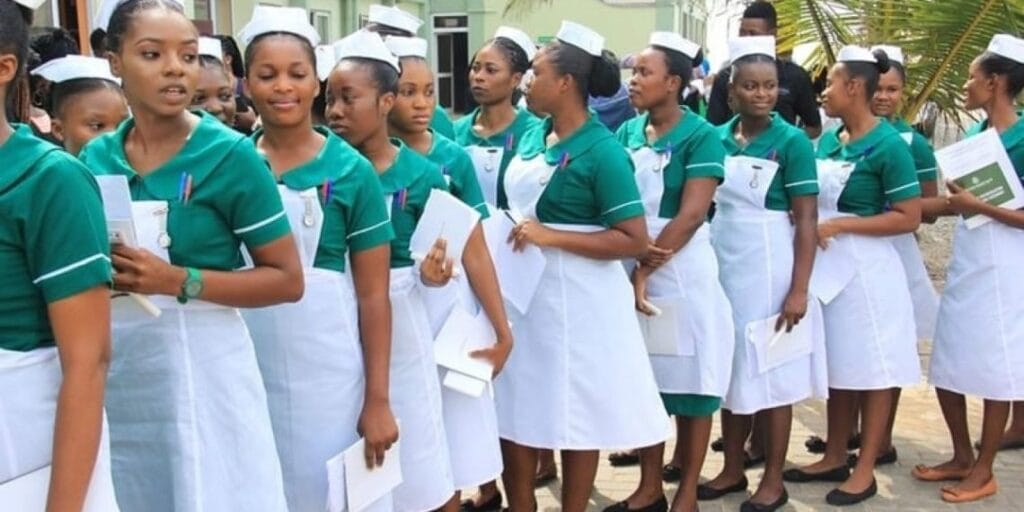
On January 26, 2026, 121 Ghanaian nurses, midwives, and allied health professionals departed from Kotoka International Airport for Antigua under the government’s Ghana Labour Exchange Programme (GLEP).
The workers left as part of a bilateral agreement aimed at creating overseas employment opportunities for trained healthcare professionals while addressing labour shortages in partner countries. The three-year renewable contracts mark the first major deployment under this initiative.
The development has sparked intense debate across Ghana, with reactions ranging from celebration to deep concern over its implications for the local health sector.
A Life-Changing Opportunity for Workers
For many of the departing professionals, the programme offers significantly better salaries, improved working conditions, professional growth, and international exposure.
Ghanaian nurses are highly sought after globally due to their quality training and English-language proficiency. Many young nurses have taken to social media to describe the move as a major breakthrough after years of limited opportunities and challenging conditions at home.
Countries in the Caribbean, Europe, and North America continue to actively recruit from Ghana to fill critical healthcare gaps.
Concerns Over Brain Drain and Local Health System
Despite the opportunities, the departure has raised serious worries about Ghana’s already overstretched healthcare system.
Many hospitals and clinics, particularly in rural areas, already face chronic staff shortages. Critics argue that losing experienced professionals could worsen the situation for patients and remaining staff.
Health experts describe this as part of a broader national challenge: creating global opportunities for skilled citizens while ensuring essential services at home are not compromised.
Government Response and Economic Benefits
Government officials maintain that the programme is a strategic win-win.
They argue that it helps reduce unemployment among qualified health workers, generates foreign exchange through remittances, and allows professionals to gain valuable experience. Officials have also promised ongoing recruitment and training to fill domestic staffing gaps.
Senior government figures, including Chief of Staff Julius Debrah and Minister of Health Kwabena Mintah Akandoh, were present at the airport send-off, underscoring official support for the initiative.
A National Conversation
The first batch deployment has ignited a wider debate about youth employment, migration, brain drain, and the future of Ghana’s healthcare system.
For some, it represents progress and empowerment. For others, it highlights difficult questions about why so many skilled professionals feel they must leave to thrive.
As more deployments are planned, the success of the Ghana Labour Exchange Programme will be closely watched to see whether it can deliver economic benefits without undermining the country’s health infrastructure.