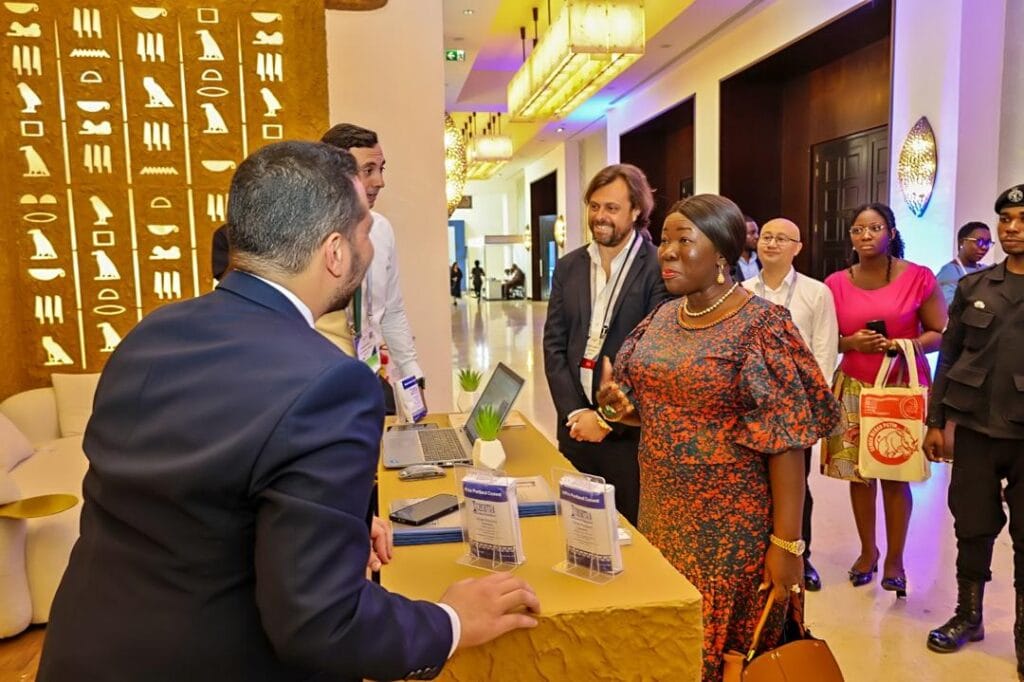
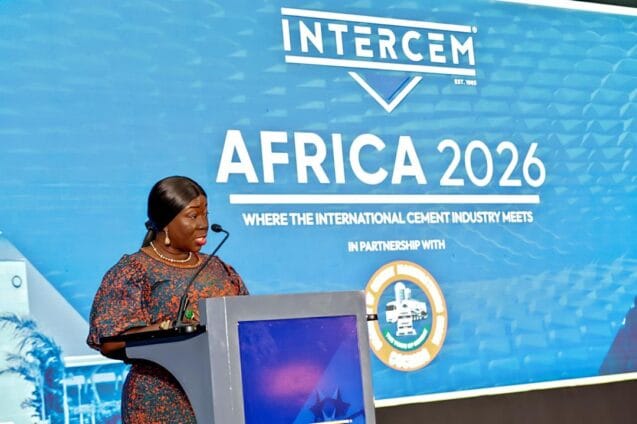
Ghana’s Trade, Agribusiness and Industry Minister, Elizabeth Ofosu-Adjare, is encouraging cement makers to use more materials that are found locally. She believes this approach can lower production costs and help build a more sustainable cement industry.
She spoke during INTERCEM Africa 2026, a big industry event that brought together people from around 40 countries and more than 100 companies in Accra.
“This is incredible and a first for Ghana,” she said.
“It shows that the country is becoming a top place for business, investment and international meetings.”
The Minister said innovation is important for the future of Ghana’s cement industry, especially as the country tries to reduce its dependence on imported clinker.
“Our cement industry needs fresh ideas,” she said.
“We need to make production more affordable and efficient, while using the raw materials we already have here in Ghana.”
She also mentioned that the country has local resources that could help support cement production if they are properly developed.
LC3 Innovation Gains Momentum in Ghana’s Cement Industry
According to the Minister, efforts to promote Limestone Calcined Clay Cement (LC3) are already showing results.
Partnerships involving CBI Ghana, she said, show that innovation in the sector is not just a future goal—it is already happening.
“CBI Ghana and Ghacem are leading the way, and we want more companies to follow their example by reducing clinker use in construction,” she noted.
She explained that Ghana’s growing industrial sector will increase the demand for cement, making it even more important to rethink how the product is made.
“Whether we like it or not, development requires more cement,” she said.
“But we must produce it responsibly.Reducing clinker imports and increasing local alternatives will help the environment and strengthen the economy.”
The Minister expressed hope that discussions at the conference would lead to practical solutions that reduce costs, improve housing delivery, and support industrial growth.
Industry Leaders Highlight Clinker Challenges
INTERCEM Africa 2026 was organised in partnership with the Chamber of Cement Manufacturers, Ghana (COCMAG), and in collaboration with CBI Ghana and the LC3 Project.
It brought together global experts to explore the future of cement production.
Chairman of COCMAG and CEO of CBI Ghana, Frederic Albrecht, said one of the biggest challenges facing Ghana’s cement industry is its heavy reliance on imported clinker.
He explained that Ghana lacks suitable limestone deposits for local clinker production, making full domestic production difficult.
“Clinker production is not feasible here because of the quality of available limestone,” he said.
“That leaves us dependent on imports, which are becoming more expensive due to fuel costs, port congestion, and global supply disruptions.”
He added that reducing clinker use through alternative local materials is key to making the industry more competitive and environmentally friendly.
Products like Ecocool and Supercem, he noted, show how lower clinker content can improve efficiency while better utilising local resources.
High Energy Costs Drive Push for Alternatives
Albrecht also pointed out that clinker production is highly energy-intensive, requiring temperatures of up to 1,500°C.
This makes the industry especially vulnerable to global fuel price changes.
He said the shift to alternative production methods will take time, but action must begin immediately.
“Building new plants takes about three years,” he said.
“That’s why we need to act now and continue working closely with government, especially the Ministry of Trade, Agribusiness and Industry, which has been very supportive.”
Call for Sustainable Growth and Collaboration
CEO of COCMAG, Bishop Dr George Dawson-Ahmoah, praised stakeholders for their role in making the conference a success.
He said the goal is to support a global cement industry that balances economic growth with environmental responsibility.
“We are proud to host more than 100 delegates and create a platform for knowledge-sharing that benefits local producers,” he said.
He noted that Ghana is gradually shifting away from clinker dependence through new approaches, including the use of clay and other local materials.
“This is a major step toward a more sustainable and cost-effective cement production model,” he added.
Key Topics Discussed at INTERCEM Africa 2026
The conference featured discussions on LC3 as a scalable solution for West Africa, global cement market trends, net-zero strategies, port and shipping challenges in the region, and changes in clinker supply chains.
Participants described the event as timely, saying it reinforced Ghana’s growing role as a hub for industrial innovation and sustainable development in Africa’s cement sector.