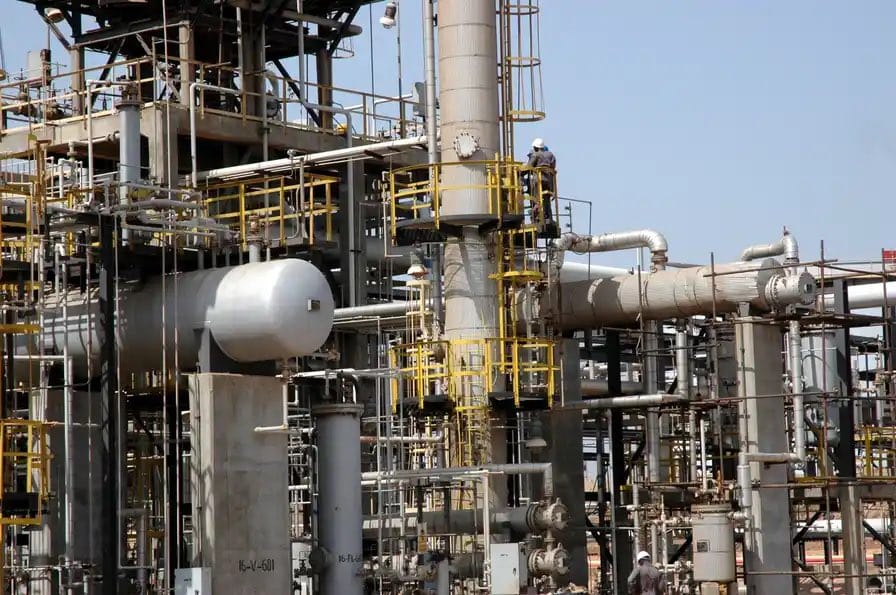
Talking of a developmental landscape in Ghana’s energy sector, the Tema Oil Refinery (TOR) is poised to start processing locally produced Ghanaian crude oil beginning June 2026, ending years of reliance on imported crude and fulfilling a long-standing goal of domestic fuel self-sufficiency.
Historic Resumption After Many Said Years of Inactivity
TOR officially resumed crude oil refining operations on December 19, 2025, after a four-year closure period marked by financial constraints, accumulated debt, and aging infrastructure . This restart followed the successful completion of extensive Turnaround Maintenance (TAM) works on its Crude Distillation Unit (CDU), executed between August 1 and October 30, 2025 .
The National Petroleum Authority (NPA) conducted regulatory inspections and granted clearance for TOR to resume operations after confirming compliance with all mandatory requirements .
Technical Capability Confirmed
TOR has definitively refuted claims that the facility cannot process Ghana’s locally produced crude. Corporate Affairs Officer Godwin Mahama Ayaba clarified that “TOR is built to process light sweet crude, which is the same grade produced from Ghana’s major oil fields” .
“Comprehensive technical assessments and crude assays have demonstrated that Ghana’s light sweet crude is compatible with the refinery’s configuration,” Mahama stated, noting that crude from both the Jubilee Field and TEN Field falls within the light sweet crude category .
The refinery has previously refined local crude without operational challenges, citing a 2016 arrangement when the Ministry of Energy supplied crude from the Tweneboa Enyenra Ntomme (TEN) Field .
Government Plans Advanced for Local Crude Supply
Management confirmed that “plans are far advanced by government to let TOR pivot to refining Ghanaian crude in the not too distant future, thus ensuring fuel stability and security” .
Discussions are ongoing among the Ministry of Energy and Green Transition, government authorities, and TOR to arrange for crude supply from Ghana’s oil fields to the refinery . Ayaba expressed optimism that “an official announcement on the supply of local crude to TOR will be made soon” .
The June 2026 timeline represents the culmination of these efforts, positioning TOR to process crude from Ghana’s offshore oil fields as part of efforts to strengthen fuel supply stability .
Capacity Expansion Underway
In a major upgrade, TOR is expanding its crude processing capacity from 28,000 to 45,000 barrels per day—a 61% increase—through integration of a new fuel processing unit (F-61) .
“With the addition of the F-61 unit, output will rise to 45,000 barrels per stream day, as the new unit works alongside the existing F1 unit connected to the crude distillation system,” the company explained . Production continues while the refinery integrates the new unit .
Additionally, TOR plans to begin a new 100,000 b/d refinery and petrochemical plant initiative in 2026, according to company head Edmond Kombat .
Recent Milestone: Nigerian Crude Shipment Arrives
Just days ago on May 28, 2026, Ghana strengthened its refining bid when TOR received one million barrels of Nigerian Bonga crude oil—a milestone shipment aimed at restoring stable operations .
The cargo, purchased from Shell and delivered aboard the Cap Felix, was supplied under a tolling arrangement with Triangle Commodities Trading, allowing third parties to provide crude in exchange for a share of refined products . This model eases financial pressures on the refinery.
The crude will yield LPG, gasoline, diesel, kerosene, aviation fuel, and fuel oil, supporting domestic supply across Ghana’s fuel market segments .
Expected Products from Ghanaian Crude
TOR confirmed that the refinery can efficiently produce gasoline, diesel, jet fuel, kerosene, and other petroleum derivatives from Ghanaian light sweet crude .
“This achievement marks a major milestone in efforts to revive Ghana’s downstream petroleum sector,” the company stated .
Strategic Importance for Energy Security
The transition to refining domestic crude represents a strategic shift toward reducing Ghana’s reliance on imported petroleum products and strengthening national energy security .
TOR’s return to operations was acknowledged in the State of the Nation Address, and Energy Minister has reaffirmed government support for TOR’s recovery .
With the June 2026 commencement of local crude refining, Ghana is re-entering the West Africa refining race with its premier state-owned facility finally operating at full potential .
The refinery is currently stabilizing its systems and optimizing performance ahead of full recommissioning, a move management says will ensure long-term reliability and sustainability .
This in summary is a big win for Ghana if all goes as planned.